Support our educational content for free when you purchase through links on our site. Learn more
15 Snub-Nosed Dog Summer Care Essentials ☀️

Snub-nosed dog summer care essentials start with shade, fresh water, short walks during cooler hours, and knowing when to head indoors. Flat-faced dogs can have a harder time cooling down when breathing is restricted, so watch your dog—not just thermometer—and treat heavy or labored breathing as a reason to stop and get help.
At Snubby Puppy, we’ve learned that a walk can go from “lovely little sniffari” to “let’s get home now” surprisingly fast, especially when the air is humid. A dog who seems comfortable on a breezy morning may struggle during a sunny afternoon outing, so we plan for the conditions and keep the route easy to cut short.
Key Takeaways
- Make cool indoor rest, shade, and fresh water easy to reach.
- Walk briefly during cooler hours and avoid strenuous play in heat or humidity.
- Never leave your dog in a parked car, even for a quick errand.
- Watch for unusual panting, weakness, vomiting, confusion, or collapse. Contact a veterinarian urgently if these occur.
- Cooling gear can help with comfort, but it cannot replace supervision, safe conditions, or veterinary care.
Table of Contents
- ⚡️ Quick Tips and Facts
- 🐶 Why Snub-Nosed Dogs Need Extra Summer Care
- What “Brachycephalic” Means
- Breds at Higher Risk of Heat Stress
- 🌡️ How Heat Affects Flat-Faced Dogs
- Why Breathing Can Be Harder in Hot Weather
- Heat Exhaustion and Heatstroke Warning Signs
- 🩺 Veterinary Heat-Safety Guidance for Brachycephalic Dogs
- ✅ 15 Snub-Nosed Dog Summer Care Essentials
- 1. Keep Fresh, Cool Water Available
- 2. Make Shade and Air Conditioning Easy to Reach
- 3. Walk During the Coolest Hours
- 4. Check Pavement Temperature Before Walks
- 5. Choose Short, Gentle Exercise
- 6. Use a Well-Fitted Harness and Secure Leash
- 7. Never Leave Your Dog in a Parked Car
- 8. Keep Indoor Play Calm and Cool
- 9. Plan Safe Pool, Beach, and Lake Time
- 10. Use Sun Protection for Sensitive Skin
- 11. Keep Coats and Skin Clean and Comfortable
- 12. Prevent Paw Burns and Saltwater Irritation
- 13. Watch for Dehydration and Overheating
- 14. Keep Parasite Prevention Up to Date
- 15. Prepare a Summer Emergency Kit
- 🚑 What to Do if Your Dog Gets Too Hot
- Safe First Aid for Suspected Heatstroke
- When to Call an Emergency Veterinarian
- 🧳 Summer Travel and Outdoor Adventure Safety
- Car Rides, Road Trips, and Rest Stops
- Camping, Festivals, and Crowded Events
- 🏠 Keeping Your Dog Cool at Home
- Fans, Cooling Mats, and Other Cooling Gear
- Grooming, Baths, and Coat Care
- 🍉 Summer Food, Treats, and Hydration
- 📋 A Simple Snub-Nosed Dog Summer Safety Checklist
- 🏛️ The History and Health of Brachycephalic Breds
- 🏁 Conclusion
- 🔗 Recommended Links
- ❓ FAQ
- Are snub-nosed dogs more likely to overheat?
- What temperature is too hot for a flat-faced dog?
- Can snub-nosed dogs go for walks in summer?
- Do cooling vests or mats help brachycephalic dogs?
- Should I shave my dog’s coat for summer?
- What are the first signs of heatstroke in a dog?
- 📚 Reference Links
Quick Tips and Facts
Snub-nosed dogs can overheat faster than many other dogs. Their shortened airways can make panting—and therefore cooling down—less effective, especially in hot, humid weather. For Snubby Puppy’s brachycephalic-dog guides, our first summer rule is simple: when conditions feel questionable, choose cool indoor rest over one more outing.
| Summer-care fact | What it means for your dog |
|---|---|
| Flat-faced anatomy can restrict airflow | French Bulldogs, Pugs, Bulldogs, Boston Terriers, Shih Tzus, and other brachycephalic dogs may have less room to breathe comfortably. Risk varies by individual dog. |
| Heat and humidity both matter | Warm, humid conditions make evaporative cooling through panting less effective. There is no single temperature that is safe for every dog. |
| Heat illness can escalate quickly | Excessive panting, weakness, vomiting, confusion, or collapse warrants urgent veterinary attention. |
| Water and shade are essentials, not extras | Keep clean water and a cool resting place available, even for brief outdoor time. |
| Parked cars are dangerous | Never leave a dog unattended in a parked vehicle, even with the windows cracked. Michigan State University College of Veterinary Medicine warns that a car can heat rapidly even when outdoor temperatures seem moderate. |
Fast summer checklist ✅
- Walk during the coolest part of the day and keep outings short.
- Check pavement with your hand; if it is uncomfortably hot for you, it may burn your dog’s paws.
- Bring water and offer breaks often.
- Skip strenuous play, crowded events, and hot-weather errands.
- Learn your dog’s normal breathing pattern so you can spot a change.
- Ask your veterinarian about breathing problems, weight management, and an individual heat-safety plan.
Why Snub-Nosed Dogs Need Extra Summer Care
“Brachycephalic” describes a short-headed skull shape. It does not mean every flat-faced dog has the same airway anatomy or the same heat tolerance. Still, narrowed nostrils, a long soft palate, or other upper-airway changes can make airflow harder. Since dogs rely heavily on panting to lose heat, breathing limitations can make hot weather especially challenging.
At Snubby Puppy, we’ve learned not to judge summer safety by thermometer alone. A dog who happily strolls on a dry, breezy morning may struggle on a humid afternoon at a lower temperature. Humidity, direct sun, exertion, fitness, age, body condition, and existing respiratory or heart problems all change the picture.
What “Brachycephalic” Means
Brachycephalic obstructive airway syndrome (BOAS) is a collection of airway abnormalities that may affect some flat-faced dogs. Signs can include noisy breathing, snoring while awake, exercise intolerance, gaging, or difficulty recovering after activity. A snore may sound charming at 2 a.m.; labored breathing is not a personality trait to shrug off.
The Royal Veterinary College’s BOAS information explains that airway problems can affect breathing and exercise. If your dog regularly pants at rest, tires quickly, or struggles to recover from mild exertion, arrange a veterinary assessment before summer activity ramps up.
Breds at Higher Risk of Heat Stress
Common brachycephalic breeds include:
- French Bulldogs and English Bulldogs
- Pugs
- Boston Terriers
- Shih Tzus
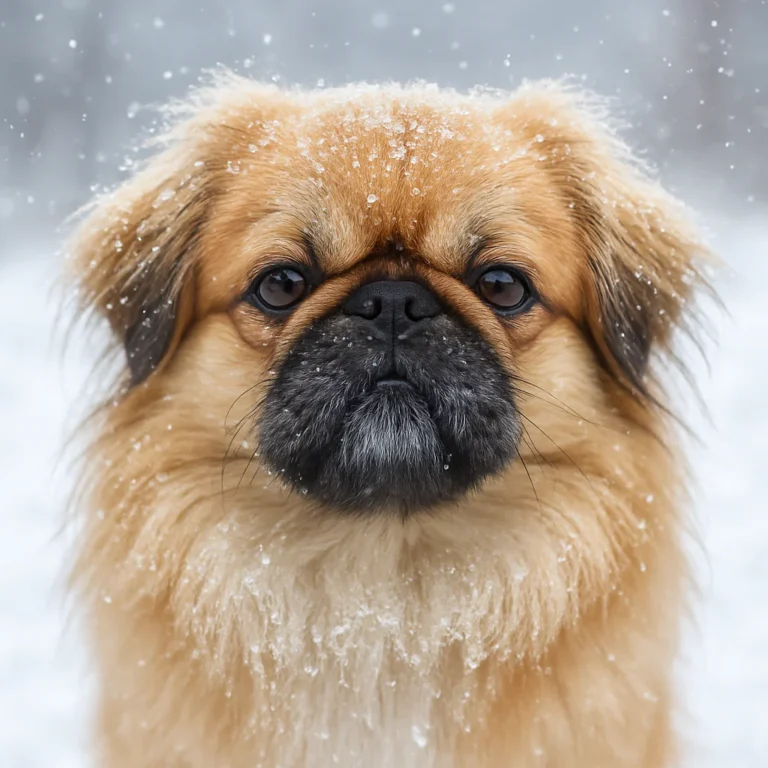
- Pekingese
- Boxers
- Japanese Chins
Breed alone cannot predict an individual dog’s risk. A fit dog with comfortable breathing may tolerate a short cool-weather walk better than an overweight dog with significant airway obstruction. Your dog’s health and behavior are better guides than a breed label alone.
How Heat Affects Flat-Faced Dogs
Dogs do not cool themselves exactly as people do. Panting helps water evaporate from the respiratory tract, while blood flow near the skin and paw pads also plays a role. When a dog’s airway makes breathing difficult, panting may be less efficient—and vigorous panting can add strain.
Heat illness can progress from discomfort to a medical emergency. Michigan State University’s pet heat-safety guidance describes excessive panting, droling, rapid heart rate, and fatigue among warning signs. Do not wait for collapse before acting.
Why Breathing Can Be Harder in Hot Weather
A dog cools itself partly by moving air and moisture through the respiratory tract. Brachycephalic airway changes can narrow that route. Add humidity, excitement, or exercise, and your dog may have to work harder just when it needs to cool down.
A few risk factors that deserve extra caution:
- Humidity and still air: Moist air reduces the effectiveness of evaporative cooling.
- Exercise and excitement: Fetch, running, and even enthusiastic greetings can raise heat production.
- Excess body weight: Extra weight can make breathing and exercise more demanding.
- Age and health: Puppies, older dogs, and dogs with heart, lung, or airway conditions may be more vulnerable.
- Dark, direct sun and hot surfaces: Shade does not always mean a cool surface; pavement and sand can retain heat.
Heat Exhaustion and Heatstroke Warning Signs
| Possible warning sign | What to do |
|---|---|
| Panting harder or louder than usual; excessive droling | Stop activity, move to a cool place, and begin cooling while monitoring closely. |
| Restlessness, weakness, or difficulty walking | Treat this as urgent. Call a veterinarian for guidance. |
| Vomiting, diarrhea, confusion, or collapse | Emergency veterinary care now. |
| Blue, gray, very pale, or unusually bright-red gums; seizures; unresponsiveness | Life-threatening emergency. Go to an emergency veterinarian immediately. |
Not every dog shows every sign, and symptoms can worsen quickly. If you suspect heatstroke, call a veterinarian while you begin safe cooling. Do not wait to see whether your dog “sleeps it off.”
Veterinary Heat-Safety Guidance for Brachycephalic Dogs
The most useful advice from veterinary sources is consistent: prevent overheating, recognize early signs, and seek veterinary care promptly when heat illness is suspected.
Michigan State University College of Veterinary Medicine emphasizes shade, fresh water, limiting heat exposure, and never leaving pets in cars. The American Veterinary Medical Association’s warm-weather guidance likewise recommends adjusting outdoor activity and avoiding dangerous heat exposure.
A published article from OnlyFresh notes that heat around 28–30°C (82–86°F) may be enough to trigger heatstroke in some brachycephalic dogs, particularly with humidity or direct sun. Treat that as a caution, not a universal safe/unsafe cutoff: veterinary guidance is better interpreted as “risk depends on the dog and conditions,” not “below this number is automatically safe.” Your dog’s breathing, the humidity, shade, exertion, and health history matter.
Our practical rule: If the air feels sticky, your dog is already panting before activity, or there is no easy way to get indoors, postpone the outing.
If your dog snores heavily while awake, pants at rest, or struggles after gentle exercise, ask your veterinarian whether airway assessment is appropriate. Some dogs with significant BOAS may benefit from treatment, including surgery in selected cases. That decision belongs with a veterinarian familiar with your dog—not a social-media comment thread.
15 Snub-Nosed Dog Summer Care Essentials
These essentials are less about buying a mountain of cooling gear and more about building a routine that prevents heat stress. The best cooling product is no substitute for shade, supervision, and knowing when to head home.
1. Keep Fresh, Cool Water Available
Offer clean water indoors and bring some on outings. A collapsible bowl such as the Ruffwear Quencher can make water breaks easier on walks; a regular bowl works perfectly well at home.
- Refresh water often, especially outdoors.
- Offer small, frequent drinks during activity rather than encouraging your dog to gulp a large amount at once.
- Never force water into a dog who is weak, confused, vomiting, or having trouble breathing; seek veterinary help.
2. Make Shade and Air Conditioning Easy to Reach
A shady spot is helpful, but shade can still be hot and poorly ventilated. When temperatures or humidity rise, an air-conditioned room is the safer retreat. Keep your dog’s resting place away from sunny windows and hot patios.
A fan can improve airflow, but it is not a replacement for air conditioning or a cool indoor environment in extreme heat.
3. Walk During the Coolest Hours
Choose early morning or later evening, then adjust based on your local weather. A “cooler” hour can still be unsafe if humidity is high or your dog is struggling.
- Keep walks short and close to home.
- Take a familiar route with shade and places to pause.
- Turn back at the first sign of unusual panting, slowing, or distress.
4. Check Pavement Temperature Before Walks
Hot pavement can burn paws. Press the back of your hand against the walking surface for several seconds. If it is too hot for your hand, choose grass, shade, or an indoor activity. This quick check is a screening tool—not a guarantee that the whole route is safe.
5. Choose Short, Gentle Exercise
Trade distance and speed for sniffing and relaxed exploration. Avoid running, ball-chasing, and rough play in warm conditions.
A good outing should end while your dog still looks comfortable. If breathing becomes loud, strained, or slow to settle after stopping, call your veterinarian for advice.
6. Use a Well-Fitted Harness and Secure Leash
A harness can help avoid pressure on the neck, but it must not restrict chest expansion or breathing. The Ruffwear Front Range Harness is one widely available option to compare for fit; measure carefully and check that your dog can move and breathe comfortably.
- Fit according to the manufacturer’s sizing guidance.
- Recheck for rubbing under the front legs and around the chest.
- A harness does not make a hot walk safe.
7. Never Leave Your Dog in a Parked Car
Not for a quick errand. Not in the shade. Not with a window cracked. Cars can heat rapidly, and dogs cannot safely wait while you “just pop in.”
If you see a dog distressed in a vehicle, contact local authorities or emergency services according to your area’s laws and guidance. Michigan State University explains the danger in its pet heat-safety article.
8. Keep Indoor Play Calm and Cool
Try low-energy enrichment instead of a warm-weather sprint:
- Scatter a portion of your dog’s kible for sniffing.
- Practice easy cues for short sessions.
- Offer a food puzzle under supervision.
- Use a lick mat with dog-safe food, then clean it thoroughly.
Stop if your dog begins panting more than expected. For ideas on reading behavior and body language, browse Snubby Puppy’s Behavior Analysis articles.
9. Plan Safe Pool, Beach, and Lake Time
Water is not automatically a cooling solution. Brachycephalic dogs can tire quickly, and some are poor swimmers.
- Supervise every moment near water.
- Use a properly fitted canine life jacket, such as the Ruffwear Float Coat, where appropriate.
- Avoid hot sand, crowded shorelines, and strenuous fetch.
- Rinse salt, sand, or pool chemicals from your dog’s coat and paws afterward.
- Leave immediately if your dog pants hard, seems unsteady, or struggles to breathe.
10. Use Sun Protection for Sensitive Skin
Dogs with thin, light-colored, or exposed skin can be vulnerable to sunburn. Ask your veterinarian which sunscreen is appropriate; do not apply human sunscreen unless your vet confirms it is safe for your dog. Keep your dog in shade and use protective clothing only if it does not cause overheating or restrict movement.
11. Keep Coats and Skin Clean and Comfortable
Brush regularly to remove loose hair and check skin folds for moisture, redness, or odor. Do not shave a double-coated dog without veterinary or qualified-groomer advice: the coat can provide insulation and some sun protection.
For wrinkled breeds, keep facial folds clean and dry according to your veterinarian’s or groomer’s instructions. Damp folds can become irritated.
12. Prevent Paw Burns and Saltwater Irritation
Choose grass or shaded paths, inspect paws after outings, and rinse off sand or saltwater. Dog boots may protect from hot or rough surfaces, but they can also trap heat or fit poorly. Introduce them gradually and stop if your dog resists, limps, or develops rubbing.
13. Watch for Dehydration and Overheating
Offer water regularly and monitor behavior. Sticky gums, weakness, unusually dark urine, or a sudden drop in energy may signal a problem, but you cannot diagnose dehydration or heat illness reliably at home. Contact your veterinarian if your dog seems unwell.
14. Keep Parasite Prevention Up to Date
Summer outings can mean more exposure to ticks, fleas, and mosquitoes. Use a prevention plan recommended for your dog by your veterinarian, and check the coat and skin after outdoor adventures. The American Heartworm Society explains why year-round heartworm prevention matters in many regions.
15. Prepare a Summer Emergency Kit
Keep these items ready in the car or near the door:
- Fresh water and a portable bowl
- A leash and well-fitted harness
- A towel for gentle cooling
- Your veterinarian’s number and the nearest emergency clinic
- Any prescribed medication
- A copy of relevant medical information
A cooling mat can be a comfortable resting surface, but check that your dog uses it voluntarily and can move away. No mat can make a hot car, hot hike, or heatstroke safe.
What to Do if Your Dog Gets Too Hot
If your dog seems overheated, stop activity immediately. Move to shade or an air-conditioned space, call your veterinarian, and follow their directions. Heatstroke is an emergency; cooling at home should happen while arranging veterinary care, not instead of it.
Safe First Aid for Suspected Heatstroke
- Stop exercise and move your dog to a cool place. Air conditioning is ideal.
- Call your veterinarian or an emergency clinic immediately. Tell them your dog may be overheating and describe the symptoms.
- Begin gentle cooling as directed. Use cool—not ice-cold—water or wet towels, and improve airflow with a fan if available.
- Keep monitoring breathing, alertness, and gum color.
- Transport your dog for veterinary care, even if they seem to improve. Heat illness can cause internal injury that is not obvious at first.
- Do not force water into a weak, confused, vomiting, or poorly responsive dog.
Michigan State University advises moving an overheated pet to a cool area and seeking veterinary care promptly; its guidance also cautions against ice because intense cold can interfere with circulation. See MSU’s full heat-safety advice.
When to Call an Emergency Veterinarian
Call immediately for heavy or noisy breathing that is not settling, weakness, difficulty walking, vomiting, diarrhea, confusion, collapse, seizures, or pale, blue, gray, or very red gums.
Do not wait for a specific body-temperature reading. A dog can be seriously ill before you can measure temperature accurately, and attempts to do so may delay care.
Summer Travel and Outdoor Adventure Safety
A summer trip can be fun, but travel adds heat exposure, unfamiliar surroundings, and delays—the very things a sensitive dog does not need. The University of Wisconsin School of Veterinary Medicine’s summer-travel discussion raises the road-or-air travel question; for a brachycephalic dog, talk with your veterinarian before booking.
Car Rides, Road Trips, and Rest Stops
- Keep the vehicle climate-controlled and your dog secured in a suitable carrier or restraint.
- Bring water, offer breaks, and avoid leaving your dog alone in the car.
- Check that your dog is breathing comfortably during the journey.
- Plan stops in shaded, low-traffic areas; skip long walks during hot rest breaks.
Camping, Festivals, and Crowded Events
Crowds, noise, excitement, and limited shade can make an outing harder than it looks. Choose a quiet, cool place to rest, keep the visit short, and leave early if your dog is panting or unsettled. If the event has no reliable shade and a quick route to a cool indoor space, your dog may be happier at home.
Keeping Your Dog Cool at Home
Home is usually the easiest place to control temperature—provided your dog can reach the cool areas freely. Close blinds on sunny windows, offer water in more than one room, and set up a quiet resting spot away from direct sunlight.
Fans, Cooling Mats, and Other Cooling Gear
Cooling products may improve comfort, but results vary. Some dogs ignore a mat; others claim it as their throne within five minutes. Introduce products gradually and supervise use, especially with chewers.
The featured video’s practical perspective emphasizes hydration, airflow, shade, and knowing when to stay indoors. It discusses portable bowls, fans, reflective shade, cooling mats, and evaporative coats, while warning that wet coats need monitoring as they dry. See the featured video. Its gear ideas can be useful, but a video is not veterinary advice—and no accessory replaces air conditioning when conditions are unsafe.
| Cooling option | Potential benefit | Caution |
|---|---|---|
| Air conditioning | Most reliable way to provide a cooler indoor environment | Keep water available and avoid abrupt, uncomfortable temperature changes. |
| Fan | Improves air movement | A fan alone may not sufficiently cool a dog in hot, humid conditions. |
| Cooling mat | Offers a cool place to rest | Supervise chewers and let your dog move off the mat freely. |
| Cooling vest | May provide evaporative cooling when used correctly | Can become warm as it dries; monitor skin and breathing. |
| Shade cloth | Reduces direct sun while allowing some airflow | Does not guarantee a cool area or safe temperature. |
Examples to compare include the K&H Pet Products Coolin’ Pet Pad and Ruffwear Swamp Cooler. Check sizing, care instructions, fit, and your dog’s comfort before use. Never force a dog to wear clothing that causes stress or restricts breathing.
Grooming, Baths, and Coat Care
Brush out loose hair and keep skin folds clean and dry. A cool or lukewarm rinse may help remove dirt after an outing, but avoid extreme cold and dry the coat thoroughly. Do not shave a coat simply because summer has arrived; ask your vet or a qualified groomer how your dog’s coat type should be managed.
Summer Food, Treats, and Hydration
Fresh water should always be available. There is no single daily amount that suits every dog in every climate; needs vary with size, food type, activity, health, and weather. If your dog suddenly drinks much more or much less than usual, contact your veterinarian.
For a cool treat, offer a small portion of your dog’s usual food in a food puzzle or lick mat. Keep treats modest so extra calories do not contribute to weight gain. Avoid foods toxic to dogs, including grapes, raisins, chocolate, and products containing xylitol; the ASPCA Animal Poison Control Center provides a searchable poison-control resource.
A Simple Snub-Nosed Dog Summer Safety Checklist
Before You Head Outside
- Check temperature, humidity, sun exposure, and the planned route.
- Choose a short outing during a cooler time of day.
- Pack fresh water, a bowl, leash, and harness.
- Check pavement and make sure shade is available.
- Leave your dog home if conditions are too hot or there is no cool retreat.
During the Outing
- Keep the pace gentle and take breaks.
- Watch breathing, energy, coordination, and gum color.
- Offer water without forcing it.
- Turn back at the first sign your dog is struggling.
After the Outing
- Move indoors to a cool space.
- Offer fresh water and allow quiet rest.
- Check paws, skin folds, and coat for irritation.
- Contact a veterinarian if breathing does not settle or any concerning signs appear.
The History and Health of Brachycephalic Breds

“Brachycephalic” refers to a shortened head shape found in several established breeds. Selective breeding has created the familiar flat-faced look many people adore, but in some dogs the shortened skull can be associated with airway obstruction and other health concerns.
The University of Cambridge’s BOAS research examines breathing problems in brachycephalic dogs and the importance of recognizing affected individuals. A flat face is not a diagnosis, and not every dog will have the same anatomy or symptoms. Still, owners can help by maintaining a healthy body condition, avoiding heat stress, and seeking veterinary advice when breathing appears noisy or effortful.
At Snubby Puppy, we love the snorts—but we do not treat struggle as cute. If your dog’s breathing is affecting sleep, play, or recovery after gentle activity, ask your veterinarian for an assessment.