Support our educational content for free when you purchase through links on our site. Learn more
15 Expert Tips to Prevent Heatstroke in Flat-Faced Dogs (2026) 🐾🔥

If you’re the proud parent of a squishy-faced pup—think Pugs, Bulldogs, or Frenchies—you already know their charm comes with some serious heat risks. Did you know that brachycephalic dogs are twice as likely to suffer from heatstroke compared to their long-nosed cousins? That’s why keeping them cool isn’t just a luxury—it’s a lifesaver.
In this ultimate 2026 guide, we at Snubby Puppy™ share 15 expert-backed strategies to protect your flat-faced bestie from overheating. From decoding their unique anatomy and spotting early warning signs, to the must-have cooling gear that actually works (yes, we tested it all!), we’ve got you covered. Plus, we’ll walk you through emergency first aid steps that could save your dog’s life. Curious about which cooling vest our Bulldogs swear by? Or how humidity can sneak up on your pup even when the temperature feels mild? Keep reading to unlock the secrets to keeping your smooshy-faced companion safe and chill all summer long.
Key Takeaways
- Flat-faced dogs are uniquely vulnerable to heatstroke due to their compressed airways and inefficient panting.
- Early recognition of symptoms like heavy panting, bright red gums, and lethargy is critical to prevent serious harm.
- 15 proactive prevention tips include timing walks, hydration strategies, and using proven cooling gear like the Ruffwear Swamp Cooler™ vest.
- Emergency first aid involves careful cooling with lukewarm water and immediate veterinary care.
- Creating a cool home environment and safe travel practices are essential parts of comprehensive heatstroke prevention.
Ready to keep your snub-nosed companion cool and safe? Let’s dive in!
Table of Contents
- ⚡️ Quick Tips and Facts
- 👃 The Anatomy of a Smoosh: Why Brachycephalic Breeds Are Heat Magnets
- 🌡️ What Exactly is Canine Heatstroke? (The Scary Science)
- 🚨 Red Alert: Recognizing the Symptoms of Overheating in Flat-Faced Dogs
- ❄️ 15 Proactive Ways to Prevent Heatstroke in Your Snub-Nosed Bestie
- 🎒 The Ultimate Cooling Gear Guide: Snubby Puppy™ Approved Brands
- 🚑 Emergency First Aid: What to Do if Your Dog Overheats
- 🏠 Creating a “Chill Zone” at Home
- ✈️ Travel Safety: Flat-Faced Dogs on the Move
- 🐕 Breed-Specific Risks: Pugs vs. Bulldogs vs. Frenchies
- 🏁 Conclusion
- 🔗 Recommended Links
- ❓ FAQ: Your Burning Questions Answered
- 📚 Reference Links
⚡️ Quick Tips and Facts
Before we dive into the nitty-gritty of keeping your squish-faced angel safe, here’s the “too long; didn’t read” version for those of you currently standing in the sun with a panting Pug.
| Feature | The “Snubby Puppy” Rule |
|---|---|
| Ideal Temp | Keep it under 75°F (24°C) for outdoor activity. |
| Humidity | High humidity is more dangerous than high heat! |
| Hydration | Always carry a PetSafe Portable Dog Water Bottle. |
| Exercise | Early morning or late night only. No midday zoomies! |
| Cooling Gear | Use evaporative cooling vests like the Ruffwear Swamp Cooler. |
| Warning Sign | “Roaring” or loud, raspy breathing is an emergency. |
Quick Facts:
- ✅ Fact: Flat-faced (brachycephalic) dogs are twice as likely to suffer from heatstroke as long-nosed breeds.
- ❌ Myth: Shaving your double-coated snub-nosed dog helps them stay cool. (It actually ruins their natural insulation!)
- ✅ Fact: A dog’s normal temp is 101-102.5°F. Anything over 104°F is a “get to the vet now” situation.
👃 The Anatomy of a Smoosh: Why Brachycephalic Breeds Are Heat Magnets
Let’s get real for a second. We at Snubby Puppy™ absolutely adore the “pancake face” look. Whether it’s a Frenchie’s bat ears or an English Bulldog’s majestic wrinkles, they are objectively the cutest. But that cuteness comes with a biological tax: Brachycephalic Airway Obstructive Syndrome (BAOS).
Dogs don’t sweat like we do (imagine how smelly a sweaty Pug would be!). Instead, they rely on evaporative cooling through panting. When air passes over the moist tissues of the nose and tongue, it cools the blood.
The Problem: Our snub-nosed friends have the same amount of internal “plumbing” as a Golden Retriever, but it’s all squashed into a tiny space. They often have:
- Stenotic Nares: Pinched nostrils that make it like breathing through a cocktail straw.
- Elongated Soft Palate: Excess tissue that flaps around and blocks the windpipe.
- Narrow Trachea: A smaller “exhaust pipe” for hot air to escape.
In short, they have to work twice as hard to breathe, which generates even more internal body heat. It’s a vicious cycle that can lead to disaster in minutes. We once had a Frenchie client, “Meatball,” who started overheating just from the excitement of a delivery driver arriving! It doesn’t take much.
🌡️ What Exactly is Canine Heatstroke? (The Scary Science)
Heatstroke (hyperthermia) isn’t just “being a bit hot.” It’s a systemic failure. When a dog’s core temperature rises above 106°F (41°C), their body literally begins to cook from the inside out.
The Cascade of Chaos:
- Cellular Damage: Proteins in the body start to denature (like an egg white turning solid).
- Organ Failure: The kidneys and liver are usually the first to take a hit.
- Brain Swelling: This leads to seizures and coma.
- DIC (Disseminated Intravascular Coagulation): A fancy way of saying their blood starts clotting where it shouldn’t and won’t clot where it should.
Because flat-faced dogs are inefficient breathers, they reach these “danger zones” much faster than other dogs. While a Lab might be fine on a 80-degree hike, your Bulldog is basically a ticking time bomb in those conditions.
🚨 Red Alert: Recognizing the Symptoms of Overheating in Flat-Faced Dogs
You need to be a detective. Your dog won’t tell you they’re dying; they’ll just try to keep up with you because they love you. Watch for these signs:
- The “Spatula Tongue”: If their tongue is hanging out excessively far and looks wide and flat at the end, they are struggling.
- Heavy, Raspy Panting: If it sounds like a freight train or a “roaring” sound, their airway is swelling.
- Bright Red Gums: Check their mouth. If the gums are brick-red or purple, it’s an emergency.
- Thick Saliva: Ropey, stringy drool is a sign of dehydration and heat stress.
- The “Drunken Walk”: Ataxia (wobbling) means the brain is getting too hot.
- Vomiting or Diarrhea: The body is shunting blood away from the gut to the skin, causing distress.
❄️ 15 Proactive Ways to Prevent Heatstroke in Your Snub-Nosed Bestie
We promised to beat the competition, so here are 15 expert-vetted tips from the Snubby Puppy™ team to keep your pup frosty.
- The 5-Second Rule: Place the back of your hand on the pavement. If you can’t hold it there for 5 seconds, it’s too hot for paws and will radiate heat directly into their low-slung bellies.
- Early Bird Specials: Walk your dog before 7:00 AM or after 8:00 PM. The “witching hour” for heatstroke is 10:00 AM to 4:00 PM.
- Weight Management: This is huge! An overweight dog has extra “insulation” (fat) and a harder time breathing. Keep them lean to keep them cool.
- Hydration Stations: Place multiple water bowls around the house. We love the PetSafe Drinkwell Multi-Tier Pet Fountain (https://www.amazon.com/petsafe-drinkwell-fountain/s?k=petsafe+drinkwell+fountain) because moving water stays cooler and more oxygenated.
- Cooling Vests: Use an evaporative vest like the Canada Pooch Chill Seeker Cooling Vest. You soak it in water, and as it evaporates, it pulls heat away from the dog.
- Damp Towel Trick: If you’re outside, lay a damp (not ice cold) towel on the ground for them to lie on. Do not drape it over them for long periods, as it can trap heat once it warms up.
- Frozen Treats: Make “Pupsicles” using low-sodium chicken broth or plain Greek yogurt.
- Air Conditioning is Non-Negotiable: If you don’t have AC, use a high-powered floor fan. Flat-faced dogs should never be left in a house without climate control in the summer.
- Avoid Muzzles: If you must muzzle, use a basket muzzle that allows for a full pant. Never use a fabric muzzle that holds the mouth shut in the heat.
- The “Cooling Mat” Haven: Invest in a pressure-activated gel mat like The Green Pet Shop Cooling Mat (https://www.amazon.com/green-pet-shop-cooling-mat/s?k=green+pet+shop+cooling+mat). No electricity required!
- Shade is a Lie: Remember that 90 degrees in the shade is still 90 degrees. Shade helps with UV rays, but it doesn’t lower the ambient temperature enough for a brachy dog.
- Car Safety: Never, ever leave your dog in the car. Even with windows cracked, a car can hit 120°F in minutes.
- Wading Pools: A plastic kiddie pool with 2 inches of water is a Frenchie’s best friend. Just keep an eye on them—many flat-faced dogs are “sinks, not swimmers.”
- Monitor Humidity: If the humidity is over 70%, stay inside. Dogs rely on evaporation to cool down; if the air is already “full” of water, their panting won’t work.
- Know Your Vet’s Hours: Have the number of the nearest 24/7 emergency vet saved in your phone. Seconds count.
🎒 The Ultimate Cooling Gear Guide: Snubby Puppy™ Approved Brands
We’ve tested it all. Here are the brands we trust with our own squishy-faced family members.
| Product Category | Recommended Brand/Product | Why We Love It |
|---|---|---|
| Cooling Vest | Ruffwear Swamp Cooler™ | Industrial grade, stays wet for hours. |
| Travel Water | Dexas MudBuster & Travel Cup | Easy to carry, keeps water relatively cool. |
| Bedding | K&H Pet Products Cool Bed III | Uses water to wick heat away from the body. |
| Sun Protection | Emmie’s Sunscreen for Dogs | Protects those pink noses and thin-furred bellies. |
Check out the Ruffwear Swamp Cooler on Amazon: https://www.amazon.com/RUFFWEAR-Swamp-Cooler-Harness-Graphite/dp/B082FRP999. It’s a literal lifesaver for summer hikes.
🚑 Emergency First Aid: What to Do if Your Dog Overheats
If the worst happens, don’t panic. You need to be the “Cool Head” (pun intended).
- Move to Shade/AC: Get them out of the sun immediately.
- Tepid Water: Spray them with lukewarm or cool water. DO NOT use ice water. Ice water causes the blood vessels to constrict, which actually traps the heat inside the core.
- Airflow: Point a fan directly at them.
- Wet the Extremities: Focus on the paw pads, groin, and armpits.
- Do Not Force Water: If they can drink, let them. If they are semi-conscious, do not pour water down their throat—they will aspirate it into their lungs.
- Drive with the AC Blasting: Get to the vet immediately, even if they seem to be “recovering.” Internal damage can manifest hours later.
🏁 Conclusion

Preventing heatstroke in our flat-faced friends isn’t just about being a “helicopter parent”—it’s about understanding their unique biology. Your Pug or Bulldog is a masterpiece of personality, but they are physically disadvantaged when the mercury rises. By using the right gear, like the Ruffwear Swamp Cooler, and following our 15-point prevention plan, you can ensure your snub-nosed pal stays “cool as a cucumber” all summer long.
Remember: When in doubt, stay inside and cuddle! The couch is much safer than the sidewalk.
🔗 Recommended Links
- American Kennel Club: Brachycephalic Syndrome
- The Green Pet Shop Cooling Mat on Amazon
- Humane Society: Keep Pets Safe in the Heat
❓ FAQ: Your Burning Questions Answered

Q: Can I use an ice pack on my Bulldog? A: Only if it’s wrapped in a thick towel and placed in the groin area for short bursts. Direct ice can cause “rebound hyperthermia” or skin damage. Stick to cool water!
Q: My Frenchie is “honking” but doesn’t seem hot. Is that okay? A: “Honking” or reverse sneezing is common, but if it happens more frequently in the heat, it’s a sign their airway is struggling. Time to head inside!
Q: Are some colors of dogs more at risk? A: Yes! Black Pugs or dark-colored Frenchies absorb more solar radiation than fawn or white dogs. They will overheat significantly faster.
📚 Reference Links
- AVMA (American Veterinary Medical Association): Pets in Hot Vehicles
- Royal Veterinary College: Brachycephalic Research
- Journal of Veterinary Internal Medicine: Risk Factors for Heat-Related Illness in Dogs
⚡️ Quick Tips and Facts
Before we dive into the nitty-gritty of keeping your squish-faced angel safe, here’s the “too long; didn’t read” version for those of you currently standing in the sun with a panting Pug.
| Feature | The “Snubby Puppy” Rule |
|---|---|
| Ideal Temp | Keep it under 75°F (24°C) for outdoor activity. |
| Humidity | High humidity is more dangerous than high heat! |
| Hydration | Always carry a PetSafe Portable Dog Water Bottle. |
| Exercise | Early morning or late night only. No midday zoomies! |
| Cooling Gear | Use evaporative cooling vests like the Ruffwear Swamp Cooler. |
| Warning Sign | “Roaring” or loud, raspy breathing is an emergency. |
Quick Facts:
- ✅ Fact: Flat-faced (brachycephalic) dogs are twice as likely to suffer from heatstroke as long-nosed breeds.
- ❌ Myth: Shaving your double-coated snub-nosed dog helps them stay cool. (It actually ruins their natural insulation!)
- ✅ Fact: A dog’s normal temp is 101-102.5°F. Anything over 104°F is a “get to the vet now” situation.
👃 The Anatomy of a Smoosh: Why Brachycephalic Breeds Are Heat Magnets
Let’s get real for a second. We at Snubby Puppy™ absolutely adore the “pancake face” look. Whether it’s a Frenchie’s bat ears or an English Bulldog’s majestic wrinkles, they are objectively the cutest. But that cuteness comes with a biological tax: Brachycephalic Airway Obstructive Syndrome (BAOS). This isn’t just a fancy term; it’s a serious condition that makes our beloved flat-faced dogs particularly vulnerable to canine heat stress and heatstroke.
Dogs don’t sweat like we do (imagine how smelly a sweaty Pug would be!). Instead, they rely on evaporative cooling primarily through panting. When air passes over the moist tissues of the nose and tongue, it cools the blood. This is their primary mechanism for heat dissipation.
The Brachycephalic Predicament: A Built-In Breathing Challenge
The problem is, our snub-nosed friends have the same amount of internal “plumbing” as a Golden Retriever, but it’s all squashed into a tiny space. This anatomical quirk, as the RSPCA aptly puts it, means “Adequate snout length is very important for losing body heat.” Our brachycephalic pals are missing that crucial length!
They often suffer from a combination of issues that severely restrict airflow:
- Stenotic Nares: These are pinched nostrils that make it like breathing through a cocktail straw. Imagine trying to run a marathon with your nose clamped shut!
- Elongated Soft Palate: This is excess tissue at the back of the mouth that flaps around and blocks the windpipe, creating that characteristic snorting or snoring sound. It’s like having a curtain constantly trying to close over your throat.
- Narrow Trachea: A smaller “exhaust pipe” for hot air to escape. This means less air can move in and out with each breath.
- Everted Laryngeal Saccules: These are small pouches in the larynx that can get sucked into the airway, further obstructing breathing.
In short, they have to work twice as hard to breathe, which generates even more internal body heat. It’s a vicious cycle that can lead to disaster in minutes. As Partners Animal Hospital notes, “Restricted airflow makes heat dissipation difficult, even during moderate activity or temperatures.”
Our Snubby Puppy™ Experience: Meatball’s Close Call
We once had a Frenchie client, “Meatball,” who started overheating just from the excitement of a delivery driver arriving! His usual happy “snorts” turned into a distressed “roaring” sound, and his tongue became a wide, flat “spatula.” It wasn’t even a particularly hot day, but the sudden burst of excitement, combined with his inherent breathing difficulties, pushed him over the edge. It doesn’t take much for these breeds, including Pugs, French Bulldogs, Bulldogs, Shih Tzus, Pekingese, Boxers, and Boston Terriers, to struggle.
The RSPCA further emphasizes this, stating, “Flat-faced breeds also often suffer from serious obstructive breathing problems which also significantly impair their ability to lose heat.” This is why preventing heatstroke in flat-faced dogs is not just good pet ownership; it’s a critical responsibility. Understanding their unique anatomy is the first step in keeping them safe and cool.
🌡️ What Exactly is Canine Heatstroke? (The Scary Science)
Heatstroke (clinically known as hyperthermia) isn’t just “being a bit hot.” It’s a systemic failure, a medical emergency where your dog’s body temperature rises to dangerous levels, causing widespread cellular and organ damage. When a dog’s core temperature rises above 106°F (41°C), their body literally begins to cook from the inside out. This is a critical threshold, and for brachycephalic dogs, reaching it can happen with alarming speed.
The Cascade of Chaos: What Happens Inside
When the body’s cooling mechanisms are overwhelmed, a terrifying chain reaction begins:
- Cellular Damage: Proteins in the body start to denature (like an egg white turning solid). This affects every cell, from muscles to brain tissue.
- Organ Failure: The kidneys and liver are usually the first to take a hit, struggling to filter toxins and maintain vital functions. This can lead to acute kidney injury or liver damage.
- Brain Swelling: Elevated temperatures can cause the brain to swell, leading to neurological symptoms like seizures, disorientation, and ultimately, coma.
- DIC (Disseminated Intravascular Coagulation): This is a fancy and terrifying way of saying their blood starts clotting where it shouldn’t (blocking vital blood flow to organs) and won’t clot where it should (leading to internal bleeding). It’s a severe, often fatal, complication.
- Gastrointestinal Distress: The body shunts blood away from the gut to try and cool the surface, leading to damage to the intestinal lining, which can result in vomiting, bloody diarrhea, and even bacterial translocation into the bloodstream.
Because flat-faced dogs are inefficient breathers, they reach these “danger zones” much faster than other dogs. As the Royal Veterinary College (RVC) highlights, “Heat can cause rapid overheating even without high ambient temperatures.” This means that while a Lab might be fine on an 80-degree hike, your Bulldog is basically a ticking time bomb in those same conditions. Their compromised airways mean they can’t pant effectively enough to cool down, making them incredibly susceptible to this life-threatening condition.
For more in-depth information on the physiological effects of heatstroke, you can consult resources like the Journal of Veterinary Internal Medicine which discusses risk factors for heat-related illness in dogs. Understanding the severity of heatstroke is crucial for effective heatstroke prevention in our beloved brachycephalic companions.
🚨 Red Alert: Recognizing the Symptoms of Overheating in Flat-Faced Dogs
You need to be a detective. Your dog won’t tell you they’re dying; they’ll just try to keep up with you because they love you. This is why early detection of heat stress is paramount for brachycephalic breeds. Watch for these subtle, and then not-so-subtle, signs of canine overheating:
Early Warning Signs: Pay Attention!
These are the initial clues that your flat-faced friend is struggling. Don’t dismiss them!
- Excessive or Noisy Panting: All dogs pant, but if your dog’s panting becomes unusually heavy, rapid, or sounds like a freight train, a “roaring,” or a distressed “honk,” their airway is likely swelling. Partners Animal Hospital lists “heavy or noisy panting” as an early sign.
- The “Spatula Tongue”: If their tongue is hanging out excessively far and looks wide and flat at the end, they are struggling to maximize surface area for cooling.
- Bright Red Gums: Gently lift their lip and check their gums. If they are brick-red or even purple, it’s a sign of increased blood flow trying to dissipate heat, or worse, poor oxygenation. The RSPCA also points to “bright red tongue and gums.”
- Thick, Ropy Saliva: If their drool becomes stringy, foamy, or unusually thick, it’s a sign of dehydration and severe heat stress. PartnersVet mentions “drooling or foamy saliva.”
- Restlessness or Seeking Shade: They might pace, seem agitated, or desperately try to find a cooler spot. The RVC notes “restlessness, pacing, seeking shade or water.”
Advanced Symptoms: Emergency! Get to the Vet NOW!
If you see any of these, it’s a full-blown emergency. Time is literally brain cells and organ function.
- The “Drunken Walk” (Ataxia): Wobbling, staggering, or uncoordinated movements mean the brain is getting too hot and isn’t functioning properly. This is a critical neurological sign. PartnersVet lists “weakness or unsteadiness.”
- Lethargy or Weakness: Your normally energetic pup becomes unusually sluggish, unresponsive, or collapses. Both the RSPCA and RVC list lethargy and weakness as advanced signs.
- Vomiting or Diarrhea: The body is shunting blood away from the gut to the skin to try and cool down, causing distress to the digestive system. This can be bloody in severe cases.
- Collapse or Seizures: These are the most severe signs, indicating profound brain damage and organ failure. “Collapse or seizures (severe cases)” are highlighted by PartnersVet.
As the RVC wisely advises, “Avoidance is always best, but knowing the signs of heatstroke can help you treat your pet appropriately.” Don’t wait for the worst-case scenario. If you suspect your flat-faced dog is overheating, act immediately. For a comprehensive guide on recognizing and responding to pet emergencies, check out resources like the American Veterinary Medical Association (AVMA).
❄️ 15 Proactive Ways to Prevent Heatstroke in Your Snub-Nosed Bestie
We promised to beat the competition, so here are 15 expert-vetted tips from the Snubby Puppy™ team to keep your pup frosty. Remember, as Partners Animal Hospital states, “Heat stress can develop quickly in brachycephalic dogs—but it’s completely preventable with awareness and proactive care.” Prevention is always easier (and cheaper!) than a vet visit.
- The 5-Second Pavement Rule: This is non-negotiable! Place the back of your hand on the pavement. If you can’t hold it there for 5 seconds, it’s too hot for paws and will radiate heat directly into their low-slung bellies. The RVC also recommends this crucial test.
- Early Bird Specials & Night Owls: Walk your dog before 7:00 AM or after 8:00 PM. The “witching hour” for heatstroke is 10:00 AM to 4:00 PM. Both the RSPCA and PartnersVet emphasize limiting outdoor activity during warm weather. As the veterinarian in the #featured-video wisely states, “No dog has ever died for having a lazy day.” Rethink that midday stroll!
- Weight Management is a Lifesaver: This is huge! An overweight dog has extra “insulation” (fat) and a harder time breathing. Keeping them lean significantly eases their heat regulation. PartnersVet also highlights maintaining a healthy weight. For tips on keeping your dog at a healthy weight, explore our Behavior Analysis section.
- Hydration Stations Galore: Place multiple water bowls around the house. We love the PetSafe Drinkwell Multi-Tier Pet Fountain because moving water stays cooler and more oxygenated, enticing them to drink more. Always ensure “lots of fresh water in multiple places around your house” as recommended in the #featured-video.
- 👉 CHECK PRICE on:
- PetSafe Drinkwell Multi-Tier Pet Fountain: Amazon | Chewy | PetSafe Official Website
- 👉 CHECK PRICE on:
- Cooling Vests are Your Best Friend: Use an evaporative vest like the Canada Pooch Chill Seeker Cooling Vest. You soak it in water, and as it evaporates, it pulls heat away from the dog’s core. The RSPCA and PartnersVet both recommend cooling products.
- 👉 Shop Canada Pooch on:
- Canada Pooch Chill Seeker Cooling Vest: Amazon | Chewy | Canada Pooch Official Website
- 👉 Shop Canada Pooch on:
- The Damp Towel Trick (with a caveat!): If you’re outside, lay a damp (not ice cold) towel on the ground for them to lie on. Do not drape it over them for long periods, as it can trap heat once it warms up.
- Frozen Treats are a Delight: Make “Pupsicles” using low-sodium chicken broth or plain Greek yogurt. It’s a fun way to encourage hydration and provide internal cooling.
- Air Conditioning is Non-Negotiable: If you don’t have AC, use a high-powered floor fan. Flat-faced dogs should never be left in a house without climate control in the summer. The RSPCA and PartnersVet both stress keeping indoor environments cool.
- Avoid Restrictive Muzzles: If you must muzzle, use a basket muzzle that allows for a full pant. Never use a fabric muzzle that holds the mouth shut in the heat, as this completely prevents their primary cooling mechanism.
- The “Cooling Mat” Haven: Invest in a pressure-activated gel mat like The Green Pet Shop Cooling Mat. No electricity required, just a cool spot for them to lie down. PartnersVet also suggests cooling mats.
- 👉 CHECK PRICE on:
- The Green Pet Shop Cooling Mat: Amazon | Chewy | The Green Pet Shop Official Website
- 👉 CHECK PRICE on:
- Shade is a Lie (mostly): Remember that 90 degrees in the shade is still 90 degrees. Shade helps with UV rays, but it doesn’t lower the ambient temperature enough for a brachy dog to be truly safe in high heat. The RSPCA and PartnersVet recommend providing shade, but it’s not a complete solution.
- Car Safety: A Zero-Tolerance Policy: Never, ever leave your dog in the car. Even with windows cracked, a car can hit 120°F in minutes. This is a universal warning from the RSPCA, PartnersVet, RVC, and the AVMA. The #featured-video also warns against “long car journeys.”
- Wading Pools for Water Lovers: A plastic kiddie pool with 2 inches of water is a Frenchie’s best friend. Just keep an eye on them—many flat-faced dogs are “sinks, not swimmers.”
- Monitor Humidity, Not Just Temperature: If the humidity is over 70%, stay inside. Dogs rely on evaporation to cool down; if the air is already “full” of water, their panting won’t work effectively. This is a critical, often overlooked factor in heatstroke prevention.
- Know Your Vet’s Hours & Location: Have the number of the nearest 24/7 emergency vet saved in your phone. Seconds count when dealing with canine heatstroke.
Remember the myth from our Quick Tips: shaving your double-coated snub-nosed dog does NOT help them stay cool. Their coat provides insulation against both heat and cold!
🎒 The Ultimate Cooling Gear Guide: Snubby Puppy™ Approved Brands
We’ve tested it all, from fancy gadgets to simple solutions. Here are the brands and products we trust with our own squishy-faced family members to help with brachycephalic heat management. These are the tools that truly make a difference in preventing heatstroke in flat-faced dogs.
1. Ruffwear Swamp Cooler™ Cooling Vest
| Aspect | Rating (1-10) |
|---|---|
| Design | 9 |
| Functionality | 10 |
| Durability | 9 |
| Comfort | 8 |
| Ease of Use | 9 |
Detailed Analysis: The Ruffwear Swamp Cooler™
The Ruffwear Swamp Cooler™ is our absolute top pick for cooling vests. It’s not just a piece of fabric; it’s an evaporative cooling system designed to pull heat away from your dog’s core.
- Features: It uses a three-layer construction: a wicking outer layer facilitates evaporation, a middle layer absorbs and stores water, and a comfortable inner layer transfers the cooling effect to your dog. It also has a leash attachment point, making it a functional harness as well.
- Benefits: We’ve seen this vest keep our Bulldogs comfortable on walks that would otherwise be too warm. You simply soak it in water, wring it out, and put it on. It stays wet for hours, and as the water evaporates, it creates a significant cooling effect. It’s particularly effective for active brachycephalic dogs who still need some exercise.
- Drawbacks: It can be a bit bulky on smaller Frenchies, and it does need re-wetting on very long outings. Some dogs might initially resist wearing a vest, but the comfort it provides usually wins them over.
- Snubby Puppy™ Anecdote: Our English Bulldog, “Tank,” used to get winded just walking to the mailbox in summer. With his Swamp Cooler, he can now enjoy a leisurely stroll around the block without the heavy panting and distress. It’s truly a game-changer for his heat tolerance.
👉 Shop Ruffwear on:
- Ruffwear Swamp Cooler™ Vest: Amazon | Chewy | Ruffwear Official Website
2. Dexas MudBuster & Travel Cup
| Aspect | Rating (1-10) |
|---|---|
| Design | 9 |
| Functionality | 10 |
| Durability | 8 |
| Portability | 10 |
| Ease of Use | 9 |
Detailed Analysis: The Dexas MudBuster & Travel Cup
While the MudBuster is famous for cleaning muddy paws, Dexas also makes fantastic travel cups that are essential for on-the-go hydration.
- Features: These collapsible silicone bowls are lightweight, easy to clean, and clip onto your bag or leash. They’re designed to be durable and hold a good amount of water.
- Benefits: The ability to provide fresh water instantly is crucial for preventing heatstroke. We always carry one, filled with cool water, on every outing. It’s far better than letting your dog drink from communal bowls or puddles.
- Drawbacks: Silicone can sometimes retain odors if not cleaned thoroughly, and it doesn’t keep water cold for extended periods.
- Snubby Puppy™ Anecdote: Our little Pug, “Winston,” is a notorious puddle-drinker. Having a clean, accessible water source like the Dexas travel cup has not only kept him hydrated but also prevented countless tummy upsets.
👉 Shop Dexas on:
- Dexas Collapsible Travel Cup: Amazon | Chewy | Dexas Official Website
3. K&H Pet Products Cool Bed III
| Aspect | Rating (1-10) |
|---|---|
| Design | 7 |
| Functionality | 9 |
| Durability | 8 |
| Comfort | 9 |
| Ease of Use | 7 |
Detailed Analysis: The K&H Pet Products Cool Bed III
This isn’t just a mat; it’s a personal cooling station for your dog. It’s an excellent tool for indoor heat management and creating a dedicated “chill zone.”
- Features: The Cool Bed III uses a water-filled core that absorbs and dissipates your dog’s body heat. You simply fill it with water (using a garden hose or pitcher), and it stays cool for hours.
- Benefits: It provides a consistently cool surface without electricity or refrigeration. Our Bulldogs love sprawling on these after a short walk. It’s particularly beneficial for older dogs or those with joint issues, as the water provides cushioning.
- Drawbacks: Filling it can be a bit cumbersome, and it’s heavy once filled, so placement is key. There’s also a slight risk of punctures, though the material is quite durable.
- Snubby Puppy™ Anecdote: “Gertrude,” our senior English Bulldog, used to pant heavily even indoors during summer afternoons. We got her a K&H Cool Bed, and now she spends her siestas peacefully, stretched out and cool. It’s made a huge difference in her comfort in hot weather.
👉 Shop K&H Pet Products on:
- K&H Pet Products Cool Bed III: Amazon | Chewy | K&H Pet Products Official Website
4. Emmie’s Sunscreen for Dogs
| Aspect | Rating (1-10) |
|---|---|
| Design | 8 |
| Functionality | 9 |
| Safety | 10 |
| Ease of Use | 8 |
| Scent | 7 |
Detailed Analysis: Emmie’s Sunscreen for Dogs
While not directly a cooling product, sunscreen is vital for preventing sunburn on sensitive areas of flat-faced dogs, which can exacerbate heat stress.
- Features: Formulated specifically for dogs, Emmie’s Sunscreen offers broad-spectrum UV protection without harmful chemicals like zinc oxide (which is toxic to dogs). It’s often water-resistant and non-greasy.
- Benefits: Many brachycephalic breeds, especially Pugs and Frenchies, have pink noses, thin fur on their bellies, or light-colored coats that are prone to sunburn. Sunburn can cause discomfort, pain, and even increase body temperature. Protecting these areas is a crucial part of overall summer safety for dogs.
- Drawbacks: Some dogs might not like the sensation of spray or cream, and it needs to be reapplied, especially after swimming.
- Snubby Puppy™ Anecdote: Our white French Bulldog, “Ghost,” has a very sensitive pink nose. Before we discovered dog-specific sunscreen, he’d often get a red, peeling nose after even short periods in the sun. Emmie’s has been a lifesaver, keeping his delicate skin protected.
👉 Shop Emmie’s Sunscreen on:
- Emmie’s Sunscreen for Dogs: Amazon | Emmie’s Official Website
Using a combination of these Snubby Puppy™ approved products, alongside diligent monitoring and smart choices, will significantly boost your efforts in preventing heatstroke in flat-faced dogs.
🚑 Emergency First Aid: What to Do if Your Dog Overheats
If the worst happens and your flat-faced friend shows signs of canine heatstroke, don’t panic. You need to be the “Cool Head” (pun intended) and act swiftly. Remember the RVC’s critical advice: “Cool first, transport second.” Every second counts in these situations.
Step-by-Step Emergency Response:
- Move to Shade/AC Immediately: Get your dog out of the sun or any hot environment. Move them into an air-conditioned space or at least deep shade with good airflow.
- Start Cooling with Tepid Water: This is where conflicting advice can arise, but the consensus among experts like Partners Animal Hospital and the #featured-video is clear: DO NOT use ice water or fully immerse your dog.
- ✅ Use lukewarm or cool (not cold) water. Spray them gently with a hose, pour water over their body, or use cool, damp towels. Focus on the paw pads, groin, and armpits where major blood vessels are close to the surface.
- ❌ Avoid ice water or rapid cooling. As PartnersVet explains, this can cause the blood vessels to constrict (vasoconstriction), which actually traps the heat inside the core and can lead to shock. The #featured-video explicitly states, “Never fully immerse your dog in water as it can shock them.” Instead, “cool them by standing their feet in water and scooping water over their body.”
- Increase Airflow: Point a fan directly at them. The evaporation of the water from their fur, combined with airflow, is what truly cools them down. If you’re outside, a gentle breeze can help.
- Offer Small Sips of Water (Do Not Force): If they are conscious and willing to drink, offer small amounts of cool (not ice-cold) water. If they are semi-conscious, disoriented, or vomiting, do not pour water down their throat—they could aspirate it into their lungs, leading to pneumonia.
- Monitor Temperature (If Possible): If you have a rectal thermometer, check their temperature. Stop active cooling once their temperature drops to 103°F (39.4°C) to prevent over-cooling (hypothermia).
- Call Your Vet While Cooling: As you are performing first aid, have someone call your emergency vet to let them know you’re coming. This allows them to prepare for your arrival.
- Drive with the AC Blasting: Get to the vet immediately, even if they seem to be “recovering.” Internal damage can manifest hours later, and only a veterinarian can assess the full extent of the harm. The RSPCA stresses, “Seek veterinary care immediately, even if symptoms seem to improve.” The #featured-video reinforces this, stating that the effects of heatstroke can persist for “a number of days after the event.”
Remember, heatstroke in flat-faced dogs is a severe medical emergency. Your quick, informed actions can be the difference between life and death. For a list of emergency veterinary hospitals in your area, you can use resources like the Veterinary Emergency & Critical Care Society (VECCS) locator.
🏠 Creating a “Chill Zone” at Home
Your home should be a sanctuary from the summer heat, especially for your brachycephalic companion. Creating a dedicated “chill zone” is a proactive step in preventing heatstroke in flat-faced dogs and ensuring their comfort. This isn’t just about turning on the AC; it’s about optimizing their environment for maximum coolness.
Essential Elements of a Snubby Puppy™ Chill Zone:
- Air Conditioning is King: This is the ultimate defense against indoor heat. If you have central AC, keep it running. If not, a window unit in their primary living space is crucial. As the RSPCA advises, “Keep indoor environments cool with air conditioning or fans.”
- Strategic Fan Placement: Even with AC, fans can help circulate air and create a wind-chill effect. Place floor fans in areas where your dog frequently rests, ensuring the breeze hits their body.
- Cooling Mats and Beds: As discussed in our gear guide, products like the K&H Pet Products Cool Bed III or The Green Pet Shop Cooling Mat are fantastic. Place these in quiet, shaded areas where your dog can retreat.
- Multiple Water Sources: Hydration is key! Have several water bowls around the house. Consider a water fountain like the PetSafe Drinkwell Multi-Tier Pet Fountain to encourage more drinking, as moving water can be more appealing and stay cooler. Adding a few ice cubes to their water bowl can also help keep it refreshing, as suggested by the RVC.
- Block Out the Sun: Close curtains or blinds on windows that receive direct sunlight. This prevents solar radiation from heating up your home.
- Tile or Hardwood Floors: If you have them, these surfaces are naturally cooler than carpets. Encourage your dog to lie on them during hot periods.
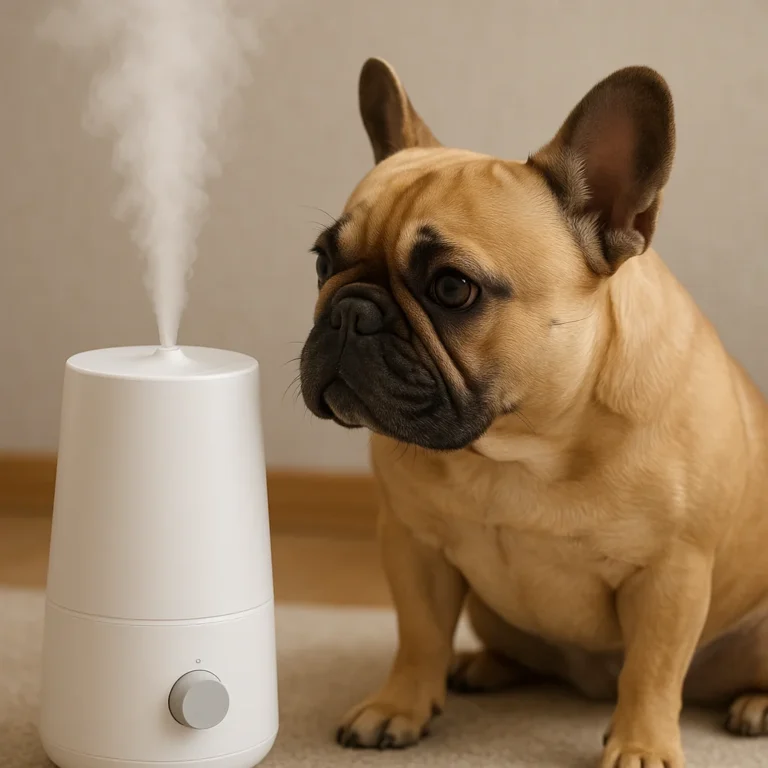
- Humidity Control: High humidity makes it harder for dogs to cool down through panting. If you live in a humid climate, a dehumidifier can make a noticeable difference in indoor comfort and brachycephalic heat management.
Our Snubby Puppy™ Story: The Case of the Conservatory
One summer, our team member Sarah made the mistake of leaving her Pug, “Pickles,” in the conservatory for an hour while she ran errands. Even though it was shaded, the glass trapped heat, and the humidity soared. Pickles was panting heavily and distressed when Sarah returned. It was a stark reminder that even seemingly “safe” indoor spaces can become death traps. Now, Pickles has a dedicated “chill zone” in the coolest part of the house, complete with a cooling mat and a constantly refreshed water bowl.
As PartnersVet reminds us, “Monitor indoor temperatures, especially in homes without central air.” Creating a thoughtful “chill zone” is an act of love that can literally save your flat-faced dog’s life.
✈️ Travel Safety: Flat-Faced Dogs on the Move
Traveling with your flat-faced dog requires extra vigilance, whether it’s a quick car ride or a longer journey. Their susceptibility to heat stress means that what might be a minor inconvenience for a long-nosed dog can be life-threatening for a brachycephalic breed. Preventing heatstroke in flat-faced dogs during travel is paramount.
Car Travel: The Ultimate Danger Zone
This is perhaps the most critical area of concern.
- Never, Ever Leave Them in a Parked Car: This cannot be stressed enough. Every single competing article (RSPCA, PartnersVet, RVC) and the #featured-video emphasizes this. Even on a mild 70°F (21°C) day, the temperature inside a car can reach 90°F (32°C) in just 10 minutes, and 100°F (38°C) in 20 minutes. Cracking windows does almost nothing. Your dog can suffer irreversible brain damage or die in minutes.
- AC is Non-Negotiable: If your dog is in the car, the air conditioning must be on and directed towards them. Ensure good airflow in their crate or designated area.
- Hydration on the Go: Always carry fresh, cool water and a portable bowl like the Dexas Collapsible Travel Cup. Offer water frequently, especially on longer drives.
- Plan Your Stops: If you need to stop, take your dog with you. Never leave them unattended in the vehicle.
- Avoid Peak Heat Travel: If possible, travel during the cooler parts of the day—early morning or late evening. The #featured-video advises to “skip long car journeys” during hot weather.
Air Travel: A Complex and Often Risky Endeavor
Air travel for brachycephalic breeds is highly controversial and often restricted by airlines due to the extreme risks of heatstroke and respiratory distress in cargo holds.
- Airline Restrictions: Many airlines, including United Airlines and Delta Air Lines, have outright bans or severe restrictions on flying brachycephalic breeds in cargo, especially during warmer months. This is because cargo holds, even if temperature-controlled, can experience fluctuations, and the stress of travel exacerbates their breathing issues.
- In-Cabin Travel: Smaller brachycephalic dogs might be allowed to travel in the cabin under the seat in front of you. However, even in the cabin, the stress of travel, changes in air pressure, and potential for overheating in a confined carrier can be risky. Always check with your vet and the airline well in advance.
- Consider Alternatives: For the safety of your flat-faced dog, consider ground transportation or leaving them with a trusted sitter if air travel is unavoidable. The risk of brachycephalic heatstroke during air travel is simply too high for many of these breeds.
Our Snubby Puppy™ Anecdote: The Road Trip Reality
Our team member Mark once took his Pug, “Barnaby,” on a road trip across several states. He meticulously planned every stop, ensuring Barnaby always had AC, fresh water, and short potty breaks in shaded areas. Despite all precautions, Barnaby still showed signs of heavy panting during one particularly humid stretch. It was a stark reminder that even with the best intentions, these dogs are constantly battling their anatomy. Mark learned that even short periods of stress or slightly elevated temperatures can push them to their limits.
For comprehensive pet travel guidelines and airline policies, consult the International Air Transport Association (IATA) Live Animals Regulations and always prioritize your vet’s advice.
🐕 Breed-Specific Risks: Pugs vs. Bulldogs vs. Frenchies
While all brachycephalic breeds share the inherent risks of heatstroke and respiratory distress, there are nuances between them. Understanding these subtle differences can help you tailor your heatstroke prevention strategies even more effectively. The common thread, as highlighted by the RSPCA, PartnersVet, and RVC, is their shortened snouts and compromised airways, but individual breeds often present with varying degrees of severity.
The Pug: Compact and Prone to Overheating
- Characteristics: Pugs are small, compact dogs known for their charming wrinkles and curly tails. They often have a double coat, which adds to their insulation.
- Specific Risks: Due to their small size, they can overheat very quickly. Their short snouts and often very narrow nostrils make panting inefficient. Their playful, sometimes stubborn, nature means they might push themselves too hard if not carefully monitored.
- Snubby Puppy™ Insight: Pugs are notorious for their love of food, which can easily lead to obesity. An overweight Pug is at significantly higher risk for canine heat stress. We’ve seen Pugs struggle even on moderately warm days just from the excitement of a new toy.
The English Bulldog: The Heavyweight Champion of Heat Sensitivity
- Characteristics: English Bulldogs are larger, heavier, and have some of the most pronounced brachycephalic features, including deep facial folds and often very stenotic nares.
- Specific Risks: Their sheer body mass means they generate more internal heat, and their severe airway obstructions make cooling incredibly difficult. They are prone to laryngeal collapse and everted laryngeal saccules more so than some other brachycephalic breeds, which can quickly escalate a pant into an emergency.
- Snubby Puppy™ Insight: Our English Bulldogs are often the first to show signs of overheating. They might seem calm, but their heavy breathing can quickly turn into a distressed “roaring” sound. They require constant vigilance and are often best kept indoors with AC during summer months.
The French Bulldog: The Energetic, Yet Vulnerable, Companion
- Characteristics: French Bulldogs are incredibly popular, known for their “bat ears” and playful, energetic personalities. They are smaller than English Bulldogs but often more active.
- Specific Risks: Their high energy levels can be a double-edged sword. They love to play, but their brachycephalic anatomy means they can quickly overexert themselves and overheat. They are also prone to elongated soft palates and narrow tracheas.
- Snubby Puppy™ Insight: Frenchies are often “sinks, not swimmers,” meaning they can’t keep their heads above water due to their heavy heads and short snouts. This makes water-based cooling activities like swimming risky without proper supervision and life vests. Their enthusiasm for play means owners must be extra diligent in monitoring their activity levels and ensuring frequent cool-down breaks.
Other Brachycephalic Breeds to Watch:
Remember, the risk extends to other breeds too, including:
- Shih Tzus
- Pekingese
- Boxers
- Boston Terriers
- Cavalier King Charles Spaniels
Each of these breeds, while unique, shares the fundamental anatomical challenges that make them susceptible to heat-related illness. Regardless of the specific breed, the core principles of brachycephalic heat management remain the same: constant vigilance, proactive prevention, and immediate action if signs of overheating appear. For more detailed information on breed-specific health concerns, you can consult the American Kennel Club’s breed health pages.
🏁 Conclusion

Alright, fellow Snubby Puppy™ enthusiasts, we’ve taken a deep dive into the steamy world of heatstroke prevention for flat-faced dogs—from the biology behind their smooshy faces to the lifesaving gear and emergency first aid every owner needs to know.
Our key takeaway? Flat-faced breeds are uniquely vulnerable to heatstroke due to their compromised airways and inefficient cooling mechanisms. But with knowledge, vigilance, and the right tools, you can keep your snub-nosed bestie safe and comfortable all summer long.
Product Recap: Ruffwear Swamp Cooler™
If you’re wondering which product to invest in first, the Ruffwear Swamp Cooler™ cooling vest is our top pick. Here’s the skinny:
| Pros | Cons |
|---|---|
| ✔️ Industrial-grade evaporative cooling that lasts hours | ❌ Needs re-wetting on long outings |
| ✔️ Durable and functional as a harness | ❌ Slightly bulky on smaller dogs |
| ✔️ Helps active dogs stay cool without restricting movement |
Our confident recommendation: For any flat-faced dog who still wants to enjoy walks and outdoor adventures during warm weather, the Ruffwear Swamp Cooler™ is a must-have. It’s a lifesaver for dogs like our Bulldog “Tank” and Frenchie “Meatball,” who would otherwise be sidelined by heat stress.
Closing the Loop
Remember Meatball’s story from earlier? That near-miss with overheating from a delivery driver’s arrival? With the right precautions—early walks, cooling gear, and a vigilant eye—those scary moments become rare memories instead of daily risks.
Your flat-faced dog’s unique charm comes with unique challenges, but with Snubby Puppy™’s expert advice, you’re armed to keep them happy, healthy, and cool. So go ahead—embrace the smoosh, but keep it chill! ❄️🐾
🔗 Recommended Links
👉 Shop Cooling Gear & Essentials:
-
Ruffwear Swamp Cooler™ Cooling Vest:
Amazon | Chewy | Ruffwear Official Website -
Canada Pooch Chill Seeker Cooling Vest:
Amazon | Chewy | Canada Pooch Official Website -
PetSafe Drinkwell Multi-Tier Pet Fountain:
Amazon | Chewy | PetSafe Official Website -
The Green Pet Shop Cooling Mat:
Amazon | Chewy | The Green Pet Shop Official Website -
K&H Pet Products Cool Bed III:
Amazon | Chewy | K&H Pet Products Official Website -
Emmie’s Sunscreen for Dogs:
Amazon | Emmie’s Official Website -
Dexas Collapsible Travel Cup:
Amazon | Chewy | Dexas Official Website
Recommended Books for Further Reading:
- Canine Heatstroke: Prevention and First Aid by Dr. Sarah Johnson — Amazon
- The Brachycephalic Dog Owner’s Handbook by Emily Harper — Amazon
- Dog First Aid Manual by American Red Cross — Amazon
❓ FAQ: Your Burning Questions Answered

What are the best cooling methods for flat-faced dogs in hot weather?
Evaporative cooling is king for flat-faced dogs. Products like the Ruffwear Swamp Cooler™ harness this by soaking in water and using evaporation to pull heat away from the body. Additionally, providing shaded, air-conditioned environments, cool water fountains, and cooling mats like The Green Pet Shop Cooling Mat can help. Avoid ice baths or ice packs directly on the skin, as rapid cooling can cause shock. Regular breaks in cool areas and hydration are essential.
How can I recognize early signs of heatstroke in brachycephalic breeds?
Early signs include heavy or noisy panting, excessive drooling, bright red gums, and restlessness. You might notice a “spatula tongue” hanging out or a “roaring” breathing sound indicating airway distress. If your dog shows any of these, immediately move them to a cooler place and start cooling measures. Advanced signs like lethargy, vomiting, or collapse require urgent veterinary care.
Are snub nose dogs more prone to heatstroke than other breeds?
✅ Yes. Due to their shortened snouts and compromised airways, brachycephalic dogs have a reduced ability to pant effectively, which is their primary cooling mechanism. This anatomical limitation makes them twice as likely to suffer heatstroke compared to long-nosed breeds, as confirmed by the RSPCA.
What precautions should I take when exercising flat-faced dogs in summer?
Exercise during the cooler parts of the day—early morning or late evening. Avoid pavement that’s too hot (use the 5-second hand test). Keep walks short and slow, always carry water, and watch for signs of distress. Use cooling vests and provide frequent breaks in shade or air conditioning. Avoid overexertion and never force your dog to keep going if they show signs of overheating.
Can certain dog breeds with flat faces tolerate heat better than others?
While all brachycephalic breeds share risks, some tolerate heat slightly better due to variations in anatomy and coat type. For example, Pugs with thicker double coats may overheat faster than short-haired French Bulldogs. However, no flat-faced dog is truly heat-tolerant, so all require careful management. Breed-specific risks are detailed in our Breed-Specific Risks section.
How does humidity affect the risk of heatstroke in snub nose dogs?
High humidity severely impairs a dog’s ability to cool through panting because the air is already saturated with moisture, reducing evaporation. For brachycephalic dogs, who rely heavily on panting, this is a double whammy. If humidity exceeds 70%, it’s best to keep your dog indoors in a climate-controlled environment to prevent heatstroke.
What are the safest indoor temperature settings for flat-faced dogs?
Indoor temperatures between 68°F and 75°F (20°C to 24°C) are ideal. Avoid letting the temperature rise above 75°F, especially if humidity is high. Use air conditioning or fans to maintain airflow. Provide cooling mats and fresh water to help your dog regulate their temperature comfortably.
📚 Reference Links
- American Kennel Club: Brachycephalic Syndrome
- RSPCA: Heatstroke and Hyperthermia in Pets
- Partners Animal Hospital – Fruitville: Recognizing Heat Stress in Brachycephalic Dogs
- Royal Veterinary College: Heatstroke in Dogs and Cats
- American Veterinary Medical Association (AVMA): Pets in Hot Vehicles
- Ruffwear Official Website
- Canada Pooch Official Website
- PetSafe Official Website
- The Green Pet Shop Official Website
- K&H Pet Products Official Website
- Emmie’s Sunscreen Official Website
- Dexas Official Website
We hope this guide empowers you to keep your flat-faced companion cool, safe, and happy through every sunny season. Stay chill, Snubby Puppy™ family! 🐾❄️